
Let’s break it down in a 3 minute read!
So you know when you feel sick before that big job interview, or your struggling to sleep days before your presentation, or you might feel the urge to go to the toilet a few times before going somewhere you haven’t been before, or start sweating and struggling to get your words out when speaking to someone new… well we are here to tell you that is all normal physical symptoms of anxiety.

But you might be wondering why does this happen? And we are here to break it down for you in a 3 minute read. Ever heard of something called the amygdala? This is part of your brain’s limbic system and is responsible for processing emotions, particularly fear.
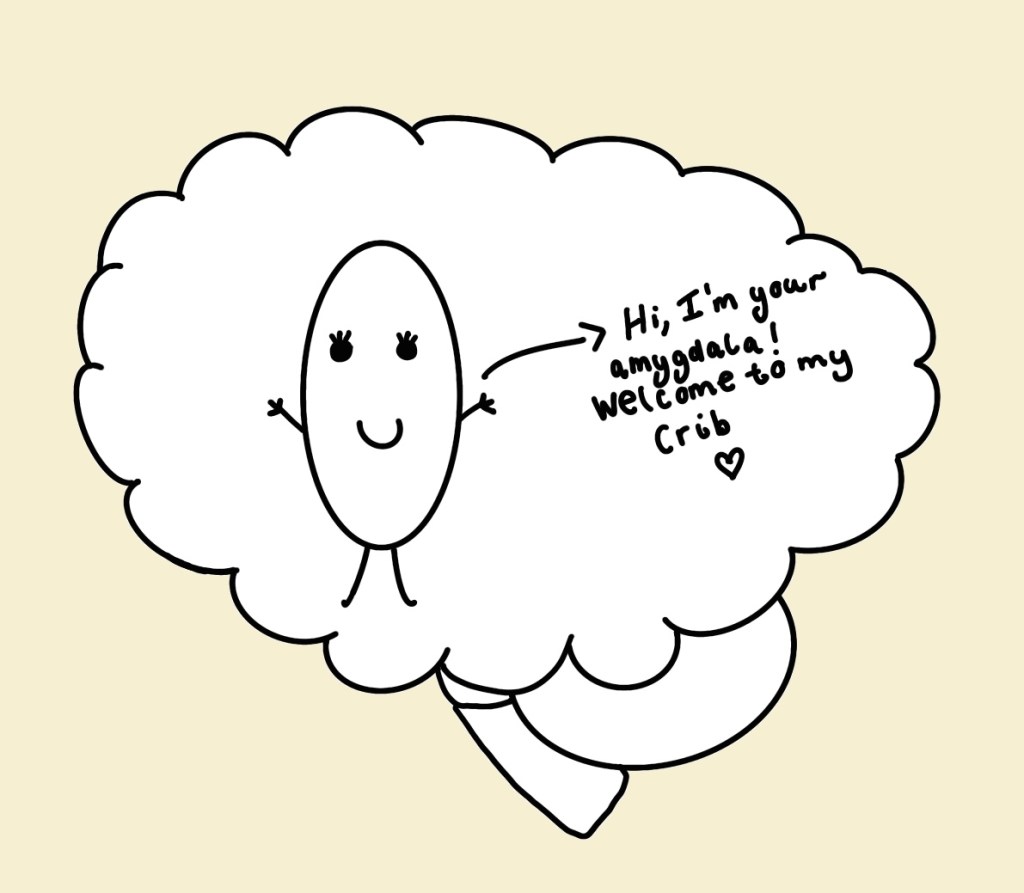
Now you might be thinking “well that’s annoying… my amygdala can’t tell the difference between being chased by a tiger and taking a test!” However, your amygdala is actually essential to your survival, but on the downside it can overprotect you a bit too much at times. Top tip: We’d say get to know your amygdala a bit better and have a go at externalising it. Start by naming it so the next time you are feeling anxious you can talk to it! It might sound weird to do but it actually might help in thinking things through and calming it down.
When your amygdala detects danger from a trigger, it activates the fight, flight, freeze response so your body is ready to protect itself from danger, whether it is real or an overestimated response to the threat or trigger. This means you start to experience physical symptoms of anxiety, your heart rate and blood pressure increases, and your breathing gets faster, blood is pumped around the body a lot quicker, and your body is ready to react. This is helpful when in a dangerous situation but when your amygdala overestimates the perceived threat, you are left with a build up of physical symptoms which don’t feel great. A behavioural response then can follow such as avoidance of the perceived threat or situation, reassurance seeking, and further safety behaviours. These behaviours are usually done to help us cope with these feelings of anxiety in the short term, but are often not very helpful in the long term when you face that situation again in the future. An example could be a fear of public speaking. The thought of this can trigger our stress response, leading to those physical symptoms and in turn a behavioural response of avoidance. But the more times we avoid this situation, our anxious feelings will either stay the same or may increase. So then we get stuck in a bit of a vicious cycle.
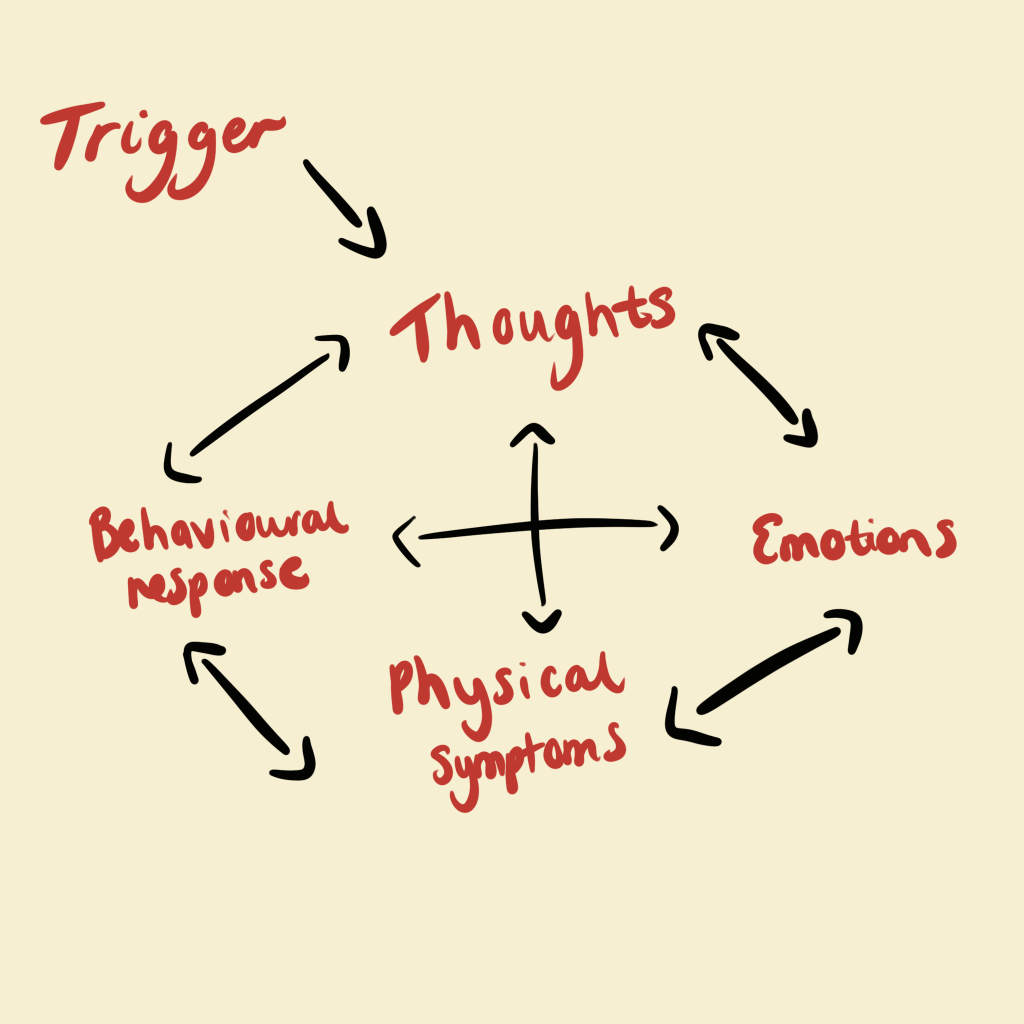
Top tip to get out of this cycle is to make a plan of how to overcome this cycle, such as gradually facing this fear over time using small and achievable steps and repeating these until feeling comfortable and less anxious. We hope that by breaking this all down into a quick and digestible 3 minute read is less overwhelming and has helped in some way❤️
*There’s obviously a lot more that is happening ‘behind the scenes’ in our brains and our bodies than just what we have explained so far. There’s also lots of other things to consider which may be triggering anxious responses such as past experiences and trauma. Therefore, we would always recommend seeking further support from your healthcare provider.
As always thank you for reading. Lots of love,
El and Bec x
 Rella Wellness Co.
Leave a comment